How many ways can we organise our thoughts about music – top “this”, top “that”. Here’s my “10 favourite songs about yellow submarines”, my “least favourite members of Owl City” ranked.
This time we take a trip through the 40 year career of a-ha, obviously my favourite Scandinavians this side of the Swedish Chef. Eleven studio albums – three in the 80s, two in the 90s, four in the 2000s (I know – you can argue that decades begin when the year ends in 1) and then one in each of the next two decades. Is that their lot? Well it might just be, given the sad news that singer Morten Harket has gone public with a diagnosis of Parkinson’s Disease.
No ratings here, just a moment in time ranking of how I perceive each album in 2025, with the album I listen to the least at the bottom and … well you can work out the rest.

11. True North | Year: 2022 | Running Time: 51m 26s
Track listing: 1. I’m In; 2. Hunter in the Hills; 3. As If; 4. Between the Halo and the Horn; 5. True North; 6. Bumblebee; 7. Forest for the Trees; 8. Bluest of Blue; 9. Make Me Understand; 10. You Have What It Takes; 11. Summer Rain; 12. Oh My Word.
Ah, newer music. Why don’t they (i.e. veteran acts) just pack it in? Well I welcome new recordings from stars who are past their commercial heyday. As guitarist Paul Waaktaar-Savoy said “If you have more to say, why not just say it?” And a-ha came along, post-COVID, with something of a concept album. True North was recorded live with the Arctic Philharmonic in Bodø, Norway (it’s quite far north), dealing with themes related to nature and the environment, but also of loss, grief and personal relationships.
While it sits at the bottom of my list (well, something has to), it did receive what were probably a-ha’s best reviews since the 1980s. Veering from the sort of music that would have sat well on any of a-ha’s recent albums (“I’m In”, “Forest for the Trees”, “Make Me Understand”) to the more jazzy pop of “Oh my Word”, “Bumblebee” and “Hunter in the Hills”, to reflective tracks like “Between the Halo and the Horn” and “You Have What it Takes”. Lovely melodies for the most part, but the lack of energy makes this an experience that you have to be in the mood for.
Play these: “I’m In“, “Forest for the Trees“, “Summer Rain“
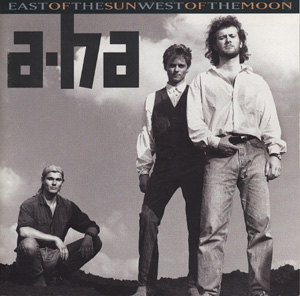
10. East of the Sun, West of the Moon | Year: 1990 | Running Time: 45m 48s
Track listing: 1. Crying in the Rain; 2. Early Morning; 3. I Call Your Name; 4. Slender Frame; 5. East of the Sun; 6. Sycamore Leaves; 7. Waiting for Her; 8. Cold River; 9. The Way We Talk; 10. Rolling Thunder; 11. (Seemingly) Nonstop July.
By the time East of the Sun, West of the Moon arrived in 1990, I had already moved on from a-ha, so this was almost all new when I first heard it in 2000. The lead single – a cover of “Crying in the Rain” – marked the first (and still only) time they included a cover on a studio album. But the bigger story here is the band’s significant shift in direction.
While the moody synths remain, and most of the album can be categorized as pop-rock, there’s a far grittier and diverse sound palette – the dark psychedelic blues of “Early Morning”, the heavier blues-rock “Sycamore Leaves”, and the straight-on riff-rock of “Cold River”. The title track explores eerie folk-rock territory, while “The Way We Talk,” sung by keyboardist Magne, is a jazzy curio.
There’s some gems here for sure but this feels like a transitional record as they pivoted from synth pop to what would be their next record. “Slender Frame” and “Waiting for Her” are two grown-up but syrupy pop songs that I could do without, “Rolling Thunder” is better but feels unnecessary after the far superior “Crying in the Rain”. On top of that, “Cold River” is a throwaway rock song that has a good groove but no chorus, and “The Way We Talk” is a brief experimental number that is just not for me. Everything else is good to great but there are just too many songs on here weighing the project down.
Play these: “Crying in the Rain“, “Sycamore Leaves“, “(Seemingly) Nonstop July“

9. Stay on These Roads | Year: 1988 | Running Time: 43m 36s
Track listing: 1. Stay on These Roads; 2. The Blood That Moves the Body; 3. Touchy!; 4. This Alone Is Love; 5. Hurry Home; 6. The Living Daylights; 7. There’s Never a Forever Thing; 8. Out of Blue Comes Green; 9. You Are the One; 10. You’ll End Up Crying.
Perhaps East of the Sun, West of the Moon was a Jekyll and Hyde record in the sense that it was a group in the process of climbing out of one world and in to another. Well the argument could be made that Stay on These Roads was a group deliberately putting a foot back in their previous world, balancing their desire to be taken seriously with their need to record hit singles.
You get mature, well written pop songs like “Stay on These Roads” and “Blood that Moves the Body”, followed by the fun, but shallow, “Touchy!” and “You Are the One”. In some ways the best songs, showcasing two of Morten’s best vocal performances, were not very commercial: “There’s Never a Forever Thing” is maybe too haunting, delicate and vulnerable while “Out of Blue Comes Green”, despite its strong hooks, is nearly seven minutes of dramatically earnest introspection. “This Alone is Love” was probably half a decade ahead of its time, caught in this late-’80s synth-pop vortex and there’s a couple of filler songs here that don’t help matters. They just sound a bit tired by the end.
Play these: “Stay on These Roads“, “Blood that Moves the Body“, “Out of Blue Comes Green“
8. Lifelines | Year: 2002 | Running Time: 61m 34s
Track listing: 1. Lifelines; 2. You Wanted More; 3. Forever Not Yours; 4. There’s a Reason for It; 5. Time and Again; 6. Did Anyone Approach You?; 7. Afternoon High; 8. Oranges on Appletrees; 9. A Little Bit; 10. Less Than Pure; 11. Turn the Lights Down; 12. Cannot Hide; 13. White Canvas; 14. Dragonfly; 15. Solace.
At 15 tracks and over an hour long, you would not be considered pedantic if you observed that Lifelines is a little on the bloated side – it could easily have benefited from a leaner edit. But if you trimmed it down to the 10 strongest songs, you’d have a compelling, cohesive record – and that’s why it lands at #8 in my countdown.
“Lifelines” is ethereal and introspective, “You Wanted More” and “Did Anyone Approach You?” bring sleek dance-rock that suits this era really well (and wish we had heard more of it). “Forever Not Yours” is a wry, tender catchy pop song, and the gradual instrumental build of the melancholic “A Little Bit” is an ear worm. I love the grimy electro rock of “Less than Pure” and, at the other end of the scale, the smooth pop stylings of “Solace” is the perfect antidote. Throw in the ‘bombastic’ curiosity “Oranges on Appletrees”, (lead singer) Morten Harket-penned Euro-pop with “Cannot Hide”, and another track that builds instrumentally, “Time and Again”, with its poetic, heartfelt lyrics and there you have it – a 10 track album that is, while not perfect, would have stood out more. But the good stuff is compelling enough to lift “Lifelines” above the albums that came before it in this list.
Play these: “Forever Not Yours“, “Did Anyone Approach You?“, “A Little Bit“
7. Foot of the Mountain | Year: 2009 | Running Time: 40m 45s
Track listing: 1. The Bandstand; 2. Riding the Crest; 3. What There Is; 4. Foot of the Mountain; 5. Real Meaning; 6. Shadowside; 7. Nothing Is Keeping You Here; 8. Mother Nature Goes to Heaven; 9. Sunny Mystery; 10. Start the Simulator.
There’s no identity crisis here – a-ha embraced a contemporary synth-pop sound for their 9th album which, at the time, was supposed to be their final record.
To be honest, for me, it’s an album without any duds. Its concise 10 track duration (a change from their bloated 2000s albums) makes it quite an easy listen from top to bottom. From the foot-stomping rocktronica of “The Bandstand” to the mesmerising space-themed electronic balladry of “Start the Simulator”, it doesn’t deviate much from its mid-tempo pop blueprint.
The second half is particularly strong – “Sunny Mystery” is a dreamy but urgent pop song with a great keyboard riff, “Nothing is Keeping You Here” and “Shadowside” are super back-to-back pop songs and “Mother Nature Goes to Heaven” is the lone guitar-led track, more akin to the sound that a-ha ran with in the 2000s, and one of the best from their later career. So why rank it here at #7 and not higher? Well there’s probably no absolute top tier track as there is on albums further up this list, and the electronic production is not my favourite thing.
Play these: “The Bandstand“, “Mother Nature Goes to Heaven“, “Sunny Mystery“

6. Cast in Steel | Year: 2015 | Running Time: 47m 01s
Track listing: 1. Cast in Steel; 2. Under the Makeup; 3. The Wake; 4. Forest Fire; 5. Objects in the Mirror; 6. Door Ajar; 7. Living at the End of the World; 8. Mythomania; 9. She’s Humming a Tune; 10. Shadow Endeavors; 11. Giving Up the Ghost; 12. Goodbye Thompson.
Ill-advised comeback album? Well, not really. Overlong, yes – a few tracks shorter and we’d be better off. But at the same time – to use modern professional wrestling parlance – it’s an album where “everyone has to get their shit in”. So there’s a few songs here that just aren’t good enough and maybe are only on the album to satisfy each member of the group individually.
“Living at the End of the World” and “Forest Fire” are two Morten Harket songs that may have been more at home on the future deluxe version of the album (my view was more liberal when I reviewed the album ten years ago), “Door Ajar” and “Objects in the Mirror” are fine but time has probably taught me that songs like these are filler; and filler is okay – not every song can be a winner – you just can’t have too much of it.
But there are winners here – elite pop ballad “Under the Makeup”, the immensely catchy “Cast in Steel”, sweet Euro pop-rock of “The Wake”, dark, sardonic synth-rocker “Mythomania” and the resurrected “She’s Humming a Tune”, a brilliantly disorienting, driving track whose lyrics were written in 1984 and lost until 2011.
Play these: “Cast in Steel“, “Under the Makeup“, “She’s Humming a Tune“.
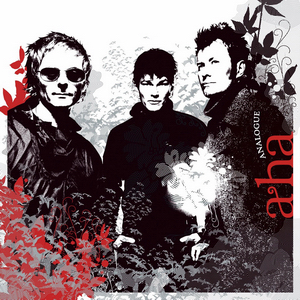
5. Analogue | Year: 2005 | Running Time: 54m 43s
Track listing: 1. Celice; 2. Don’t Do Me Any Favours; 3. Cosy Prisons; 4. Analogue (All I Want); 5. Birthright; 6. Holyground; 7. Over the Treetops; 8. Halfway Through the Tour; 9. A Fine Blue Line; 10. Keeper of the Flame; 11. Make It Soon; 12. White Dwarf; 13. The Summers of Our Youth
a-ha’s rockiest album of the 2000s – and, in some ways, their return to the mainstream – Analogue gave them their first UK top 10 hit since 1988 with the title track. Despite modest sales and limited promotion, the album contains some of their most varied and interesting material.
It opens with the dark, brooding electro-rock of “Celice,” whose provocative video made headlines – and the song is just as raunchy and unrestrained. “Don’t Do Me Any Favours” brings cynical, hooky pop-rock, while “Over the Treetops” evokes late-era Beatles with acoustic warmth, strings, and layered harmonies.
The album moves confidently across styles: the wistful pop of “Birthright,” the nostalgic charm of “Keeper of the Flame,” the elegiac minimalism of “White Dwarf,” and the intimate folk of “The Summers of Our Youth,” a duet between Magne and Morten.
There’s oddness, too – the sprawling “Halfway Through the Tour,” the hymn-like “Holyground,” the restrained “A Fine Blue Line,” (with its standout outro) and the bizarre “Make It Soon”, that erupts midway through just when you were lying back in your recliner (I’ve spoiled the surprise now).
A bit uneven? Yes. But Analogue is a bold patchwork of different ideas, and a-ha’s most adventurous album since the ’90s.
Play these: “Over the Treetops“, “Make it Soon“, “White Dwarf“
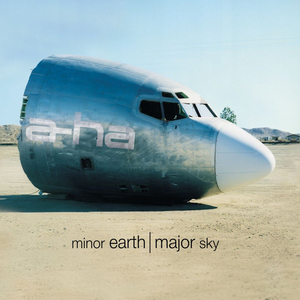
4. Minor Earth | Major Sky | Year: 2000 | Running Time: 58m 42s
Track listing: 1. Minor Earth | Major Sky; 2. Little Black Heart; 3. Velvet; 4. Summer Moved On; 5. The Sun Never Shone That Day; 6. To Let You Win; 7. The Company Man; 8. Thought That It Was You; 9. I Wish I Cared; 10. Barely Hanging On; 11. You’ll Never Get Over Me; 12. I Won’t Forget Her; 13. Mary Ellen Makes the Moment Count.
In the cold light of day, Minor Earth | Major Sky has to be seen as a triumphant return for a-ha. I’m not sure it was obvious at the time, but retrospectively, some fans have been critical of the production. Wikipedia notes that Niven Garland was brought in to remix most of the album (all but “Summer Moved On” and “To Let You Win”) to make it more commercial. Maybe it worked – it was their first #1 album in Germany.
But we have what we have, and it’s a record full of excellent adult contemporary pop. I was 26 when this came out, having not listened to a-ha since 1989, and I couldn’t believe “Summer Moved On” when I first heard it – how could something so gentle soar so high? But there was more.
The title track blends synth-rock and bass-heavy beats, “Velvet” is moody femme-fatale pop, and “The Sun Never Shone That Day” is a groovy slow-burn pop-rock number. The world-weary trio of “Little Black Heart,” “To Let You Win,” and “I Wish I Cared” tackle related themes in different styles. “Thought That It Was You” is one of Morten’s best songwriting contributions – spiritual, tender, and beautifully sung.
“You’ll Never Get Over Me” is classic pop with sparkling guitar work and a clever call-and-response with Paul’s wife Lauren, who lends backing vocals on the track. And “Mary Ellen Makes the Moment Count” closes the album with a spectral mix of acoustic folk and layered synths.
A few questionable production choices aside, this was a great reset for the band.
Play these: “Minor Earth | Major Sky (original album version)”, “Summer Moved On“, “Mary Ellen Makes the Moment Count“
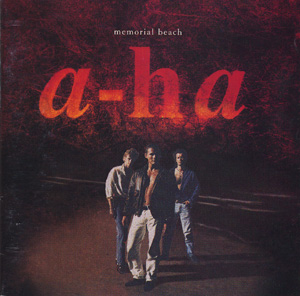
3. Memorial Beach | Year: 1993 | Running Time: 49m 33s
Track listing: 1. Dark Is the Night for All; 2. Move to Memphis; 3. Cold as Stone; 4. Angel in the Snow; 5. Locust; 6. Lie Down in Darkness; 7. How Sweet It Was; 8. Lamb to the Slaughter; 9. Between Your Mama and Yourself; 10. Memorial Beach.
Remember way back, when I talked about a-ha being caught somewhat between two – I dunno – lovers? The preceding album, East of the Sun, West of the Moon was a pop-rock record, influenced by blues, folk, and jazz, but garnished with a-ha’s roots in 80s synth-pop.
Memorial Beach mostly escapes that legacy, leaning fully into alternative rock – a direction some in the band called natural and organic, others less convinced. The album was commercially unsuccessful and critically underwhelming at the time, but it’s aged well. Many fans – including those who discovered it later – now hold it in high regard.
“Cold as Stone,” clocking in at over eight minutes, is a dark, ambitious mid-tempo rocker with excellent vocals and instrumentation. “Locust” is equally bold – eerie and hypnotic, packed with percussion, reverb, and modulated vocals. It practically begs to soundtrack a moody Netflix murder mystery.
Lead single, “Dark Is The Night”, is majestic and uplifting – very U2 of the era – while “Move to Memphis” (a remixed 1991 single), “Lie Down in Darkness,” and the sweeping “How Sweet It Was” between them showcase strong hooks, energetic tempos, and standout piano lines.
“Angel in the Snow” might be their best failed chart single (UK #41), and the sparse title track closes the album beautifully. With most of the album written by Paul, Magne’s “Lamb to the Slaughter” still fits seamlessly with its dark, swaggering cynicism.
Could they have swapped “Between Your Mama and Yourself” for a stronger song and made a five-star album? Maybe. But personally, I enjoy that song’s goofy, bluesy charm – the only question is whether it belonged near the end or as some respite in the middle of the record.
Play these: “Dark Is The Night“, “Cold as Stone“, “Locust“
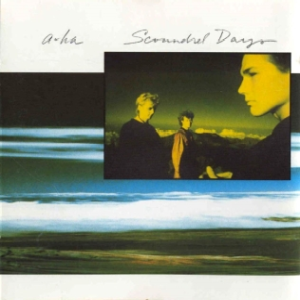
2. Scoundrel Days | Year: 1986 | Running Time: 38m 41s
Track listing: 1. Scoundrel Days; 2. The Swing of Things; 3. I’ve Been Losing You; 4. October; 5. Manhattan Skyline; 6. Cry Wolf; 7. We’re Looking for the Whales; 8. The Weight of the Wind; 9. Maybe, Maybe; 10. Soft Rains of April.
The music press had seen it all before: a band explodes out of nowhere with a massive debut, quickly follows up with a second album… and it all falls apart. But Scoundrel Days proved a-ha were not a one-album wonder. This was the sound of a band with serious songwriting chops, unafraid to get darker, moodier, and far more ambitious.
The title track and “The Swing of Things” are stunningly accomplished dark pop songs – as far removed from “Take On Me” as you could get. “I’ve Been Losing You” is a raucous pop-rock anthem with lyrics set in the aftermath of a crime of passion, and “Manhattan Skyline” is what happens when you cross Scandinavian melancholy with alternative ’80s rock. The oft-overlooked “October” closes side one with a moody, jazz-tinged intimacy.
The second half doesn’t quite reach the same heights, but there’s still much to like. “The Weight of the Wind” is the clear standout – dramatic and melodic. Top 10 hit “Cry Wolf” is a middling track that always sounded better live. Everything else is good but just not to the standard of that excellent first half.
Play these: “The Swing of Things“, “I’ve Been Losing You“, “Manhattan Skyline (original album version)”
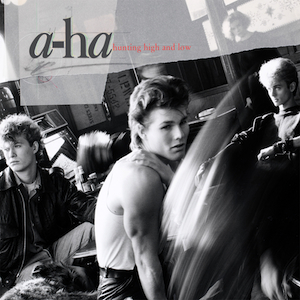
1. Hunting High and Low | Year: 1985 | Running Time: 37m 10s
Track listing: 1. Take On Me; 2. Train of Thought; 3. Hunting High and Low; 4. The Blue Sky; 5. Living a Boy’s Adventure Tale; 6. The Sun Always Shines on T.V.; 7. And You Tell Me; 8. Love Is Reason; 9. I Dream Myself Alive; 10. Here I Stand and Face the Rain.
The story of how many tries it took for “Take On Me” to become a hit is as true as it is commonly told. So let’s leave aside the elephant in the room and focus on the rest of the record.
You could argue there’s not a poor song here. Even the less attention-grabbing tracks – “And You Tell Me” and “Love Is Reason” – are light, melodic, and genuinely delightful. Beyond the four smash hits (“Take On Me,” “The Sun Always Shines on TV,” “Train of Thought,” and the title track), you’ve got a run of deep cuts that are just as essential: “The Blue Sky,” “Living a Boy’s Adventure Tale,” “I Dream Myself Alive,” and especially the haunting closer, “Here I Stand and Face the Rain,” which is a melancholic masterpiece.
What’s striking in hindsight is the maturity in the songwriting. For a group of guys in the first half of their 20s – in their debut, no less – the emotional nuance and lyrical depth were beyond what pop music typically offered up. And for listeners discovering it as young teens (I was 12), those words and messages “hit hard”.
Play these: “The Blue Sky“, “Sun Always Shines on TV (original album version)”, “Here I Stand and Face the Rain“
 nearvana
